Why Small Bay Industrial Is the Hottest Asset Class in the Boston Suburbs
Why Small Bay Industrial Is the Hottest Asset Class in the Boston Suburbs
If you've talked to anyone in commercial real estate lately, you've probably heard the term "small bay industrial" come up more than once. It's not a new product type, but it's having a moment — and for good reason.
What is small bay industrial, exactly?
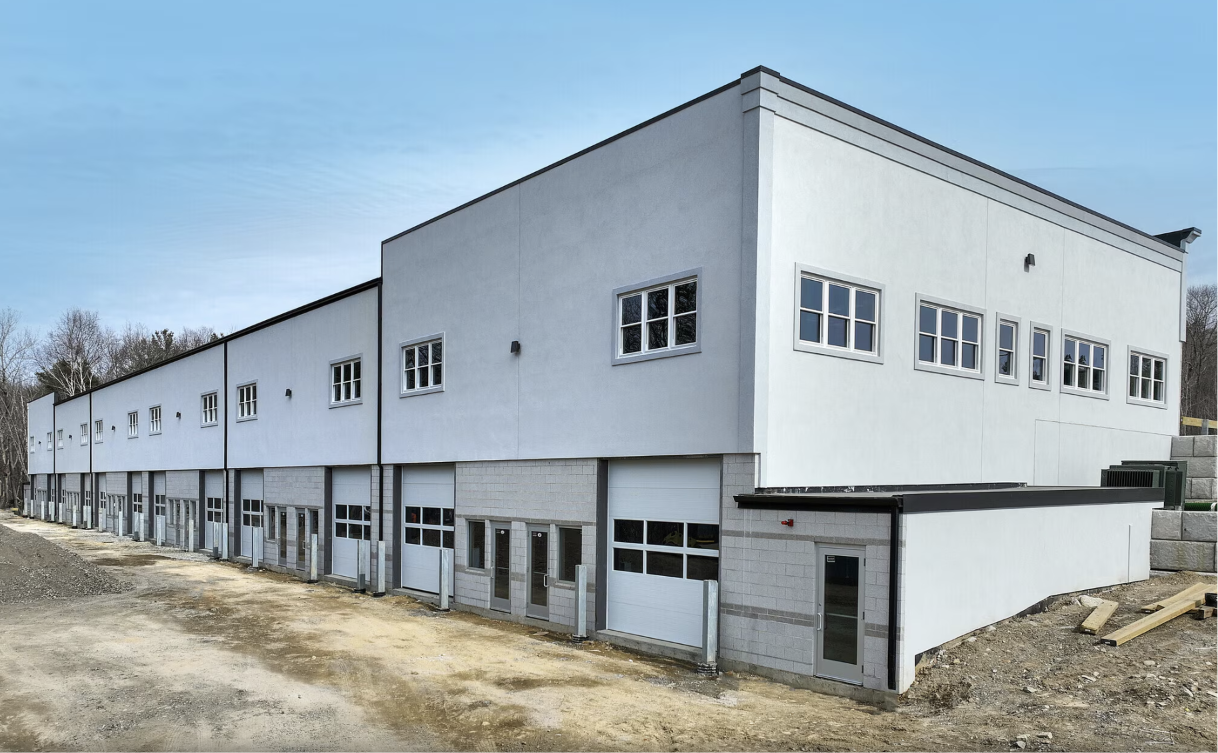
Small bay industrial refers to light industrial buildings — typically somewhere in the 1,500 to 5,000 square foot range — with drive-in or small dock loading, minimal office buildout, and flexible configurations that can be split among multiple tenants or occupied by a single user. Think local contractors, specialty fabricators, e-commerce distributors, tradespeople, and small-scale manufacturers. These aren't the million-square-foot big-box warehouses going up along the highway corridors; they're the smaller, functional buildings that quietly keep the regional economy running.
Why is everyone talking about it now?
A few things are converging at once:
The big-box market has cooled. After a wave of large speculative development during the pandemic years, big-box industrial space is now sitting at some of its highest vacancy levels in over a decade, and rents have softened as a result. Small bay assets have largely avoided that oversupply problem because so little new small bay product has been built in recent years.
Tenant demand has shifted toward smaller, shorter-term deals. Rather than large, expansion-driven commitments, a growing share of leasing activity across Greater Boston has trended toward smaller and mid-sized space requirements, as tenants favor flexibility over long-term, large-scale bets.
Supply is genuinely tight. Small bay buildings are difficult to develop profitably given today's construction and land costs, so very little new inventory is being delivered. That scarcity, paired with steady local demand, is exactly the kind of dynamic that drives up both rents and investment interest.
Investors have taken notice. What was once considered a niche, overlooked asset class is now attracting real institutional attention, precisely because of its resilience and the stable, granular tenant base it tends to attract.
What this means if you own, occupy, or are considering buying small bay space
If you're a tenant, don't assume you have the same leverage you might have in the big-box market right now. Small bay space in good suburban locations is leasing quickly, and the flexible, well-located buildings are going first. If your lease is coming up for renewal, or you've outgrown your current space, it's worth starting that conversation earlier than you might think.
If you're an owner, this is a favorable environment. Well-maintained small bay buildings in the right suburban submarkets are seeing strong tenant interest and, in many cases, real investor demand if you're considering a sale.
If you're an investor, small bay industrial offers something increasingly rare in this market: a diversified, multi-tenant income stream in an asset class where supply constraints are structural, not cyclical.
The bottom line
Small bay industrial isn't a passing trend — it reflects real, durable demand from the local businesses that make up the backbone of the Boston suburban economy, combined with a supply picture that isn't likely to loosen up anytime soon. Whether you're leasing, buying, selling, or just trying to understand where the opportunity is in today's industrial market, it's a segment worth paying close attention to.
If you're weighing your options on a small bay property — as a tenant, owner, or investor — I'm happy to walk through what I'm seeing in the market and how it might apply to your specific situation.